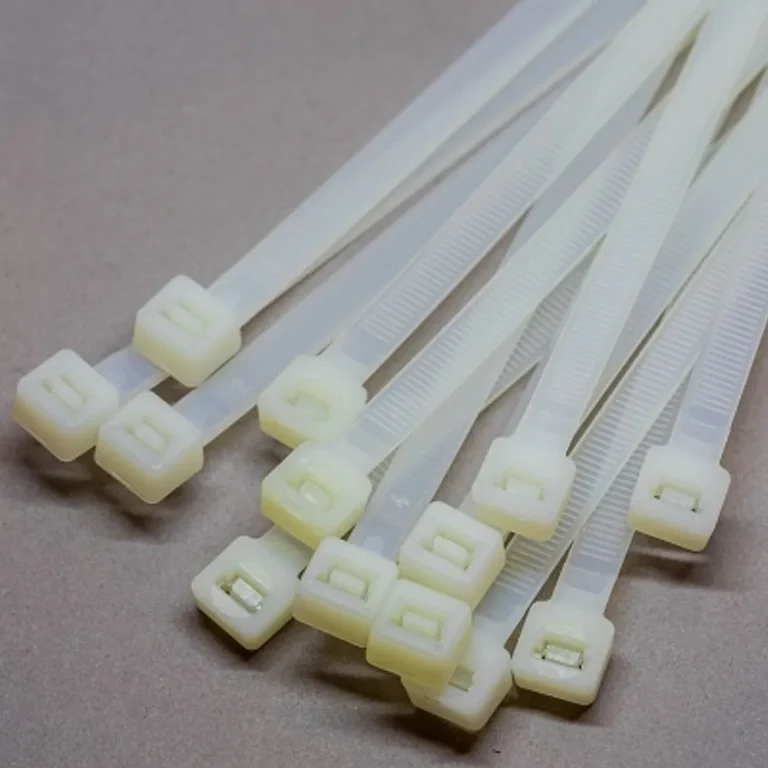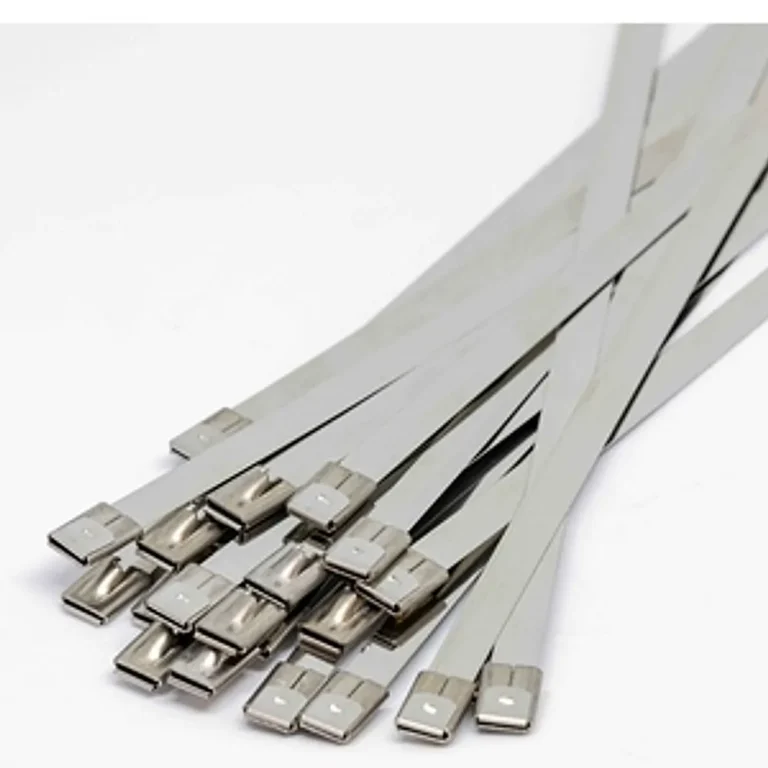
Yes. Black nylon cable ties that are UV stabilised resist sunlight far better than natural white or coloured ties, because the carbon black pigment absorbs ultraviolet light before it can damage the nylon. That is why black is the default colour for any outdoor job. For installs that must last many years in full sun, by the sea or near heat, stainless steel ties are the better choice.
This guide explains what sunlight does to nylon, why black ties last longer, what affects outdoor life in Australia, and how to make outdoor ties last as long as possible.
What does sunlight do to nylon cable ties?
Ultraviolet light breaks the long polymer chains that give nylon its strength and flexibility. The damage starts at the surface and works inwards.
Over time, a tie in full sun goes through the same stages: the surface fades and turns chalky, the strap loses its spring, and finally it cracks, often at the head or where the strap bends tightly around the bundle. Heat speeds the process up, and Australian UV levels are among the highest in the world. A natural white tie on a north-facing fence or roof can become brittle surprisingly quickly.
How do black cable ties resist UV?
UV-stabilised black ties contain carbon black, a fine pigment spread through the nylon that absorbs ultraviolet light and turns it into a small amount of heat, so the nylon underneath is protected.
Some ties also include chemical UV stabilisers. Our black cable ties are UV-stabilised nylon 66, from 2.5mm to 12.7mm wide. Coloured ties are dyed for identification, not for sun protection, so treat red, blue, yellow and other colours like white ties outdoors.
How long do cable ties last outdoors?
There is no single number, because outdoor life depends on how much direct sun the tie gets, how hot it runs, whether it moves, and how much load it carries.
| Tie and situation | Relative outdoor life | Notes |
|---|---|---|
| Natural white nylon, full sun | Shortest | Best kept indoors or in deep shade |
| Coloured nylon, full sun | Short | Dyes are for identification, not UV protection |
| Black UV-stabilised nylon, partial shade | Long | Typical for fences, gardens, under eaves |
| Black UV-stabilised nylon, full sun on hot metal | Moderate | Heat and movement shorten life; inspect yearly |
| 304 or 316 stainless steel | Longest | Not affected by UV at all |
A black tie in the shade on a garden fence will far outlast one on a north-facing roof rack carrying a vibrating load. Inspect outdoor ties every year or two and replace any that look chalky, have faded to grey, or crack when you flex the tail.
How can I make outdoor cable ties last longer?
- Choose black UV-stabilised ties, never white or coloured, for anything in the sun.
- Go one width up from what the load needs: 7.6mm instead of 4.8mm for shade cloth, signs and windbreak.
- Keep the strap off sharp edges. File burrs or pad the edge so the strap is not cut as it moves.
- Tension properly so the bundle cannot move and chafe, but do not strangle soft materials.
- Use more ties rather than fewer, so no single tie carries a long span or a gusting load.
- Point the heads away from direct sun where you can. The head is where most outdoor failures start.
When should I use stainless steel ties instead?
Use stainless steel cable ties when the install must last for many years in full sun, sits near salt water, or runs close to heat. Stainless steel does not degrade in UV at all.
Choose 304 grade inland and 316 grade within a few kilometres of the coast. Solar farms, marine fit-outs, mine sites and road signage commonly specify stainless for exactly this reason. Where the steel strap could scratch paintwork or rub cable insulation, nylon-coated stainless ties combine the two. The grade choice is explained in 304 vs 316 stainless steel cable ties.
Do heat and cold matter as well?
Yes. Heat speeds up UV damage, and nylon is stiffer and more likely to crack in frost. Nylon 66 ties are generally used from about -40°C to 85°C.
Dark surfaces in the Australian sun can run well above air temperature, so a tie on a black roof sheet or steel frame is working much harder than one on a timber post. Read more in do cable ties go brittle? and nylon 6 vs nylon 66 cable ties.
Which black cable ties suit outdoor jobs?
| Job | Suggested black tie |
|---|---|
| Garden mesh, trellis, light irrigation | 4.8 x 200 to 300mm |
| Fence mesh to star pickets | 4.8 x 370mm or 7.6 x 300mm |
| Shade cloth, windbreak, signs and banners | 7.6 x 300 to 530mm |
| Poly pipe to posts, large bundles | 9 x 530mm and longer |
| Heavy hose and machinery | 12.6 to 12.7mm heavy duty |
Browse the full range of black cable ties, or see cable ties for fencing and shade cloth for spacing tips.
Quick answers
Are all black cable ties UV resistant?
Not automatically. Black colour helps, but a tie should be sold as UV stabilised. Our black nylon 66 ties are UV stabilised.
Do white cable ties go brittle in the sun?
Yes, natural white nylon degrades much faster in sunlight than UV-stabilised black nylon. Keep white ties indoors.
Are coloured cable ties UV stabilised?
Coloured ties are dyed for identification. Treat them like white ties outdoors.
What lasts longest outdoors?
Stainless steel cable ties. They are not affected by UV, and 316 grade also resists salt.