Colour coding with cable ties means giving each colour one meaning, writing the code down, and using it the same way every time: for example red for faults, green for checked, orange for temporary. Keep the code to four to six colours, stock enough of each, and never rely on colour alone where safety matters. Coloured ties have the same strength as black ties of the same width.
This guide shows where colour coding helps, how to set up a code that people actually follow, sample codes for common jobs, and the colours and sizes we stock.
Why colour code with cable ties?
A coloured cable tie does two jobs at once: it holds something and it tells you something about it. With a simple written code, a quick look tells you which circuit, zone, batch or inspection a tie belongs to, without opening a drawing or reading a label.
That saves time on site, in plant rooms, in data racks and in the warehouse, and it reduces mistakes when several people or trades work on the same job.
Where does colour coding help most?
- Electrical: marking circuits, phases, tenancies or essential and non-essential supplies in a ceiling or riser.
- Data and AV: separating networks, floors, customers or patch runs in a rack.
- Construction: marking zones, stages or trades on temporary fencing and services.
- Inspections and test-and-tag: a different colour each inspection period shows at a glance what has been checked.
- Warehousing and hire: batches, customers, returns and items awaiting repair.
- Farming and nurseries: rows, varieties, treatments, mob or ownership.
- Events: which cables belong to which stage, supplier or day.
How do I set up a colour code that works?
- Decide what you are coding. One thing per code: circuits, or zones, or inspection periods. Mixing meanings is how codes fall apart.
- Keep it short. Four to six colours are easy to remember; twelve are not.
- Use colours people already understand. Red for stop, fault or hazard; orange for temporary or caution; green for checked or OK; blue for information.
- Write it down. Put the code on the switchboard door, in the rack, on the site board and in the job file. A code that lives in one person’s head leaves with them.
- Stock enough of each colour. When a colour runs out, people substitute, and the code is broken.
- Add text where it matters. Use a write-on tie marker or label alongside the colour for anything safety-related.
- Review it. Check the code is still being followed at each inspection or handover.
What are some example colour codes?
| Use | Example code |
|---|---|
| Inspection periods | A new colour each quarter or year, rotating through four colours |
| Data rack | Blue: office LAN, green: security/CCTV, yellow: phones, red: critical or core links |
| Construction site | Orange: temporary services, red: do not remove, green: inspected |
| Warehouse and hire | Green: ready to hire, yellow: needs checking, red: faulty, blue: customer-owned |
| Nursery or farm | One colour per variety, row or treatment batch |
These are examples, not standards. Where an industry or site already has a code, follow it.
Should I rely on colour alone?
No, not where safety matters. Some people are colour blind, colours fade in sunlight, and lighting changes how colours look. For anything to do with isolation, hazards or critical services, add a written label or a cable tie marker with a write-on tag, so the meaning is in words as well as colour.
Do coloured cable ties last outdoors?
Coloured ties are dyed for identification and are not as UV resistant as UV-stabilised black ties. For short-term outdoor coding, such as an event or a build stage, they are fine. For long-term outdoor coding, inspect them regularly, or use black cable ties with coloured markers or tape. See are black cable ties UV resistant?
Are coloured cable ties as strong as black?
Yes. Colour does not change strength: a 4.8mm tie is rated at 22kg in any colour, and a 2.5mm tie at 8kg. The colour pigment does not weaken the nylon 66.
Which colours and sizes do you stock?
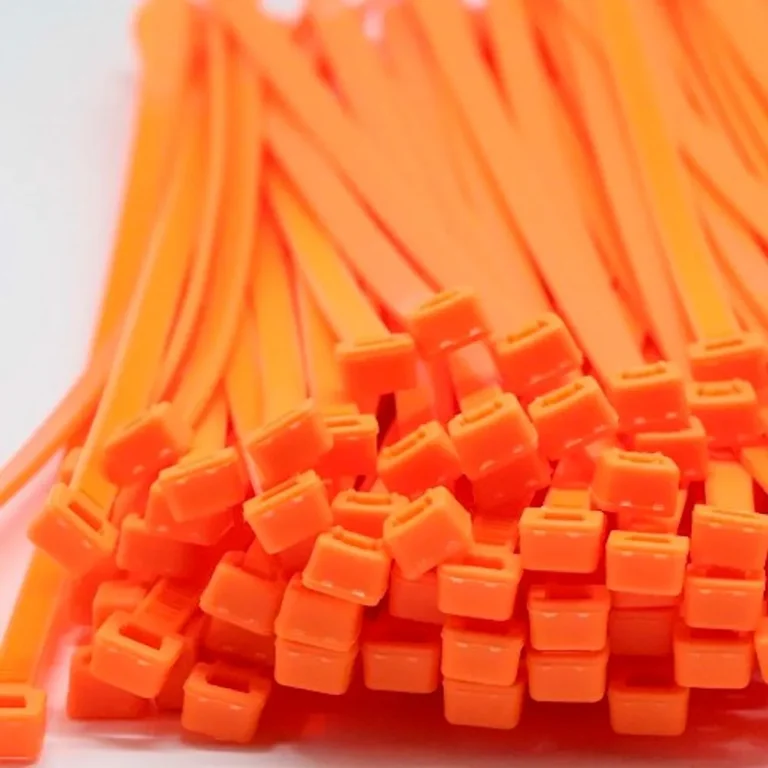
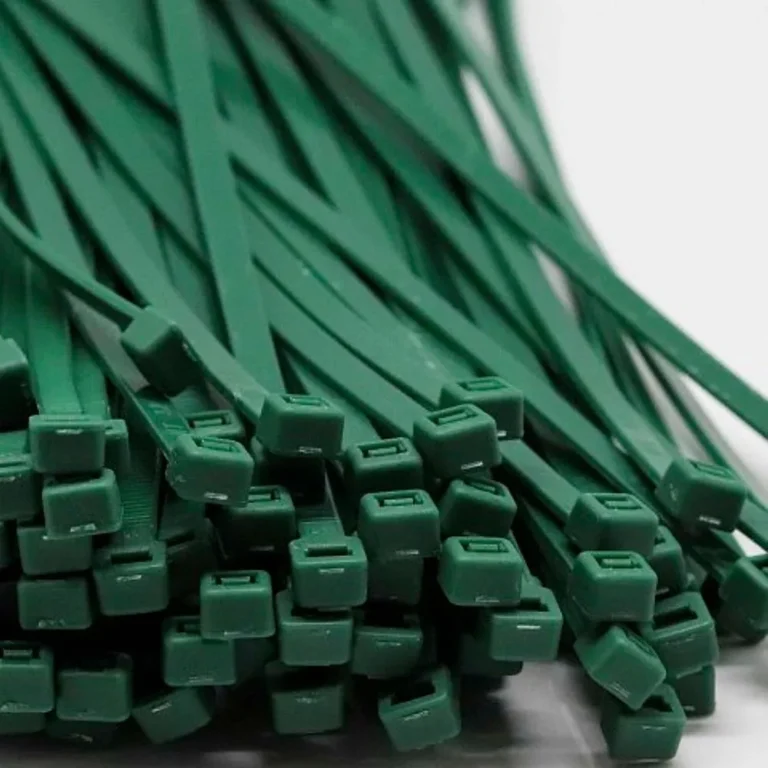
Our colour cable ties come in red, orange, yellow, pink, light green, dark green, sky blue, dark blue, purple, maroon, grey and brown, plus mixed colour packs. Most colours are available in 2.5 x 200mm for light looms and tagging and 4.8 x 200mm for general work, with 4.8 x 300mm in selected colours.
Want several colours at once? The rainbow bundle in cable tie bundles has six 4.8 x 200mm colours. Bulk pricing applies per colour: 5 packs of the same product are 10% off each, and 10 packs are 20% off each.
Quick answers
What does a red cable tie mean?
There is no universal meaning. Red is commonly used for faults, hazards or do-not-remove, but follow the code on your site.
How many colours should a code use?
Four to six. More colours are harder to remember and to keep in stock.
Can I use coloured cable ties outdoors?
For short periods, yes. For long-term outdoor use, black UV-stabilised ties last longer.
Are mixed colour packs good for coding?
They are handy for small jobs and testing a code. For a site-wide code, buy each colour separately so you never run short of one.