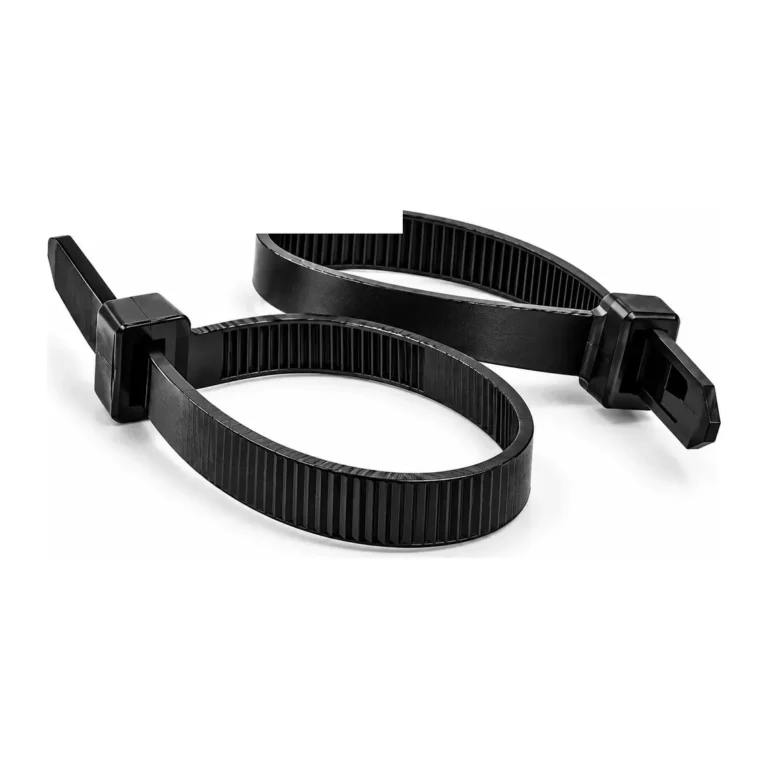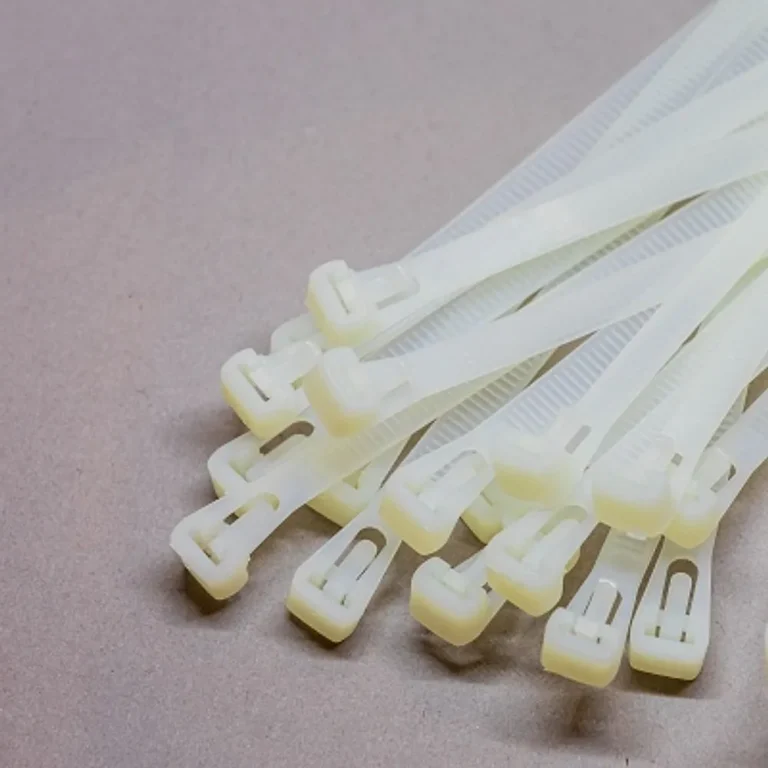
Use adhesive cable tie mounts on smooth, clean surfaces such as enclosures, panels and vehicle interiors; push type cable ties where there is a hole to clip into, such as factory loom holes in a vehicle; and mountable cable ties, which screw down through the head, on timber, steel framing and chassis rails. In hot spots or for heavy runs, add a screw to an adhesive mount or use a mountable tie.
This guide explains how each option works, which surfaces they suit, how to make adhesive mounts stay put, and how to space fixings.
Why fix cable ties to a surface?
Bundling cable is half the job. The other half is holding the bundle where it belongs, so it does not sag, chafe on edges, get snagged or put weight on terminals. A loom fixed every few hundred millimetres stays neat and lasts longer than one left to hang.
How do adhesive cable tie mounts work?
An adhesive mount is a small square base with an adhesive pad on the back and a slot for a cable tie. Many also have a centre hole for a screw. Ours come in 20mm and 28mm sizes.
- Best on smooth, clean surfaces: enclosures, panels, desks, appliance backs and vehicle interiors.
- Quick, with no drilling for light runs.
- The 28mm mount has a larger pad and suits heavier bundles and wider ties.
- Add a screw for heavy runs, warm locations or rough surfaces.
How do I make adhesive mounts stick?
- Clean the surface with isopropyl alcohol to remove oil, dust and silicone. Let it dry.
- Fit the mount at room temperature if you can. Adhesive bonds poorly when cold.
- Press firmly for about 30 seconds to spread the adhesive.
- Leave it to set before loading. The bond builds over hours, not seconds.
- In a hot enclosure, on rough or painted surfaces, or for a heavy loom, put a screw through the centre hole.
Adhesive is weakest when cold and when hot. If a mount will see direct sun, engine heat or a warm switchboard, plan on the screw.
How do push type cable ties work?
The clip is moulded into the tie. Push it into a hole and the barbs lock behind the panel, so the tie and the bundle are fixed in one step.
- Ideal for refitting vehicle looms to factory holes, and for panels where you can drill.
- Match the clip to the hole size; a loose clip rattles and a tight one will not seat.
- We stock 3.6 x 150mm and 4.8 x 200mm push type ties, plus Toyota and Holden factory-clip styles.
- Very fast once the holes exist.
See push type cable ties, and cable ties for cars, 4WDs and trailers for vehicle use.
How do mountable cable ties work?
A mountable tie has a screw hole moulded into the head, so one screw fixes the tie and the bundle to the surface. It suits timber, steel framing, chassis rails and anywhere adhesive will not hold. Our mountable cable ties are 4.8 x 200mm. Use a pan-head or wafer-head screw that sits flat in the head.
Which fixing should I choose?
| Surface or situation | Best option |
|---|---|
| Smooth, clean plastic or metal | Adhesive mount |
| Hot location or heavy load | Adhesive mount with a screw, or a mountable tie |
| Factory clip holes in a vehicle | Push type tie |
| Panel you can drill | Push type tie or adhesive mount with screw |
| Timber or steel frame | Mountable tie |
| Rough, dusty or painted surface | Mountable tie, or a mount with a screw |
| Temporary or trial fit | Adhesive mount with a releasable tie |
How far apart should mounts be?
Close enough that the loom cannot sag between fixings: often every 200 to 300mm on vertical runs and inside enclosures, and every 300 to 400mm along vehicle chassis and trailer drawbars. Add a fixing either side of any bend, and before connectors so the weight of the loom is not on the terminals.
Which ties go with mounts?
Most mounts take ties up to 4.8mm wide; the larger mount suits wider ties. Use black UV-stabilised ties outdoors and in vehicles, and white ties in indoor enclosures. Switchboard work is covered in switchboard cable management.
Quick answers
Why do adhesive cable tie mounts fall off?
Usually a dirty surface, fitting in the cold, loading too soon, or heat. Clean with isopropyl alcohol, press firmly, wait, and add a screw in hot spots.
What is a push mount cable tie?
A tie with a barbed clip moulded in, which pushes into a hole and locks behind the panel.
Can mountable cable ties be screwed to metal?
Yes, with a self-drilling or machine screw to suit the metal, or into a drilled and tapped hole.
Which mount size should I buy?
20mm for light runs and small enclosures, 28mm for heavier bundles and wider ties.