To release a cable tie without cutting it, slide a fine flat point under the small locking tongue (the pawl) inside the head, lift it clear of the strap teeth, and pull the tail back out. It works on most nylon ties up to 4.8mm wide. On heavy-duty or stainless steel ties, cutting and refitting is usually quicker and safer.
This guide explains how the lock works, two ways to open it, which tools to use, when cutting is the better choice, and how to avoid the problem altogether with ties made to undo.
How does a cable tie lock?
A one-piece nylon cable tie locks with a pawl: a tiny hinged tongue moulded inside the head that rides over the teeth on the strap as you pull it tight, then catches against them so the strap cannot slide back.
The teeth are angled like a ratchet. Pulling the tail makes each tooth push the pawl aside and click past it. Pushing the tail back the other way jams the flat face of a tooth against the tip of the pawl. The more load on the bundle, the harder the pawl bites. That is why a tie holds so well, and also why it is so hard to undo once it is under tension.
To release the lock you only need to do one thing: move the pawl away from the teeth by a fraction of a millimetre while you pull the strap back out.
Method 1: how do I lift the pawl with a fine point?
Lifting the pawl is the most reliable way to open a standard tie, and on 2.5mm to 4.8mm ties it takes about ten seconds once you have done it a couple of times.
- Find the side of the head where the tail comes out. Look into the slot: the pawl sits just inside the opening, between the strap and the head wall.
- Choose a fine, flat point: a small jeweller’s screwdriver, a straightened paperclip, a dressmaker’s pin, a sewing needle, or the back (blunt) edge of a craft knife blade.
- Slide the point in between the pawl and the strap teeth, from the tail side. Keep it flat against the strap.
- Press the pawl gently away from the teeth. You do not need to bend it far.
- While holding the pawl up, ease the tail back out through the head. Pull steadily rather than yanking, or the pawl will drop back onto the next tooth.
- If the tie is tight around a bundle, squeeze the bundle slightly first to take the load off the pawl.
Go slowly. If you lever too hard the pawl can crack or snap off, and then the tie will never lock again. A tie released this way will usually lock again, but treat it as second-hand: use it for light work, not for a load close to its rating.
Method 2: can I release a thin tie by bending the tail?
On thin 2.5mm and 3.6mm ties you can sometimes open the lock by pushing the tail back into the head while bending it sharply, which flexes the teeth away from the pawl.
Hold the head between thumb and finger, bend the tail back over the head, and push it inwards while wiggling the strap. It is quicker than Method 1 when it works, but it is less reliable and often stretches or whitens the strap. A stretched strap has lost some strength, so do not reuse it for anything that matters.
Which tools work best?
| Tool | Works on | Notes |
|---|---|---|
| Jeweller’s flat screwdriver (1 to 1.5mm) | 2.5mm to 4.8mm nylon | The best all-round choice. Thin enough to fit, stiff enough to lift the pawl. |
| Straightened paperclip or pin | 2.5mm and 3.6mm nylon | Always to hand. Can bend if the tie is under load. |
| Craft knife blade, blunt edge first | 3.6mm to 7.6mm nylon | Strong, but keep the sharp edge away from the strap and your fingers. |
| Small pick from a precision tool set | Most nylon ties | The hooked tip makes it easy to lift the pawl from below. |
Whatever you use, work away from the cable insulation and keep fingers clear of the point.
When should I just cut the tie?
Cut the tie when releasing it would take longer than replacing it, or when releasing it is unsafe. That includes:
- The tie is under heavy load and the pawl is jammed hard against the teeth.
- It has been outdoors for years and the nylon is faded, chalky or brittle. It will snap rather than release.
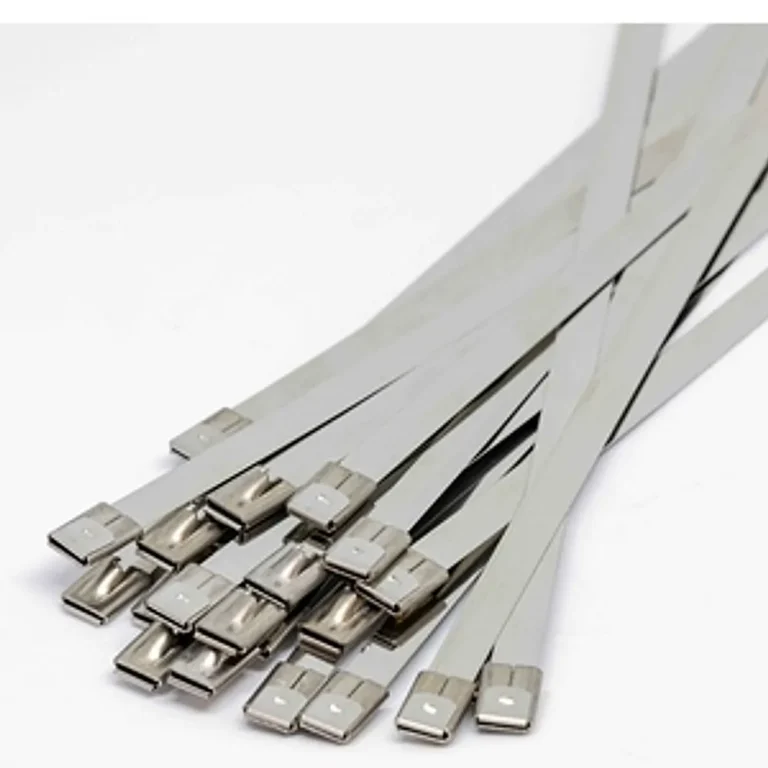
- It is a stainless steel tie. The ball lock grips harder the more it is loaded, and the strap edges are sharp.
- It is a wide heavy-duty tie (9mm or 12.6mm) where the pawl is too stiff to lift by hand.
- You have dozens to remove. A new tie costs a few cents.
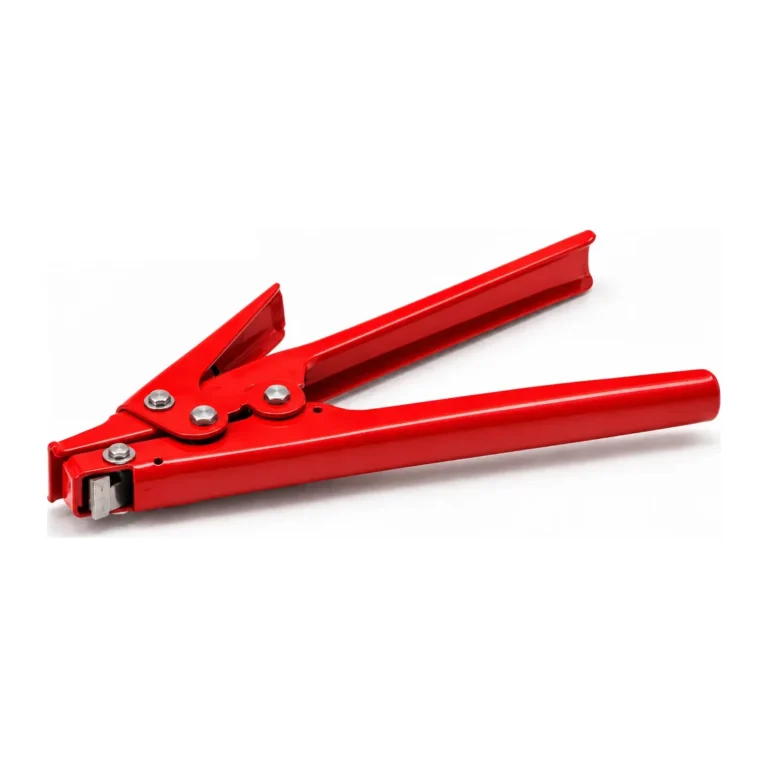
When you cut, use flush cutters or a cable tie gun so you do not leave a sharp spike on the head, and always cut with the blade facing away from the cable. A nicked insulation jacket is a bigger problem than a lost tie.
What is the better option if I undo ties often?
Use releasable cable ties: they have a lever built into the head, so you press it and the strap slides straight out, as many times as you need.
Our releasable ties are 7.6mm wide with a 55kg breaking strain, in 200mm, 300mm and 400mm lengths. Choose black releasable ties (UV stabilised) for outdoor work and white releasable ties for indoors. They suit:
- Event and stage cabling that goes up and comes down every weekend.
- Temporary fencing, barriers and signs.
- Garden ties that need loosening as stems and trunks grow.
- Bundles in racks and vehicles that you add to often.
- Trial fitting a loom before the final ties go on.
The full comparison is in releasable vs standard cable ties.
Is a released tie as strong as a new one?
Not always. Releasing a tie can scratch the pawl, stretch the strap, or wear the first few teeth, so a reused tie should be treated as having less margin than a new one.
Before reusing, pull the tail through and check that it clicks on every tooth and holds when you tug the loop. If it slips, or the strap shows white stress marks, throw it out. For anything carrying a real load, fit a new tie of the right width; see breaking strain vs safe working load.
Quick answers
Can you reuse a cable tie after releasing it?
Yes, if the pawl is intact and the strap is not stretched. Check that it clicks and holds, and use it for light loads only.
Can you release a stainless steel cable tie?
Not in any practical way. The ball lock grips harder as load increases. Cut it with a stainless tie gun or side cutters and cover the cut edge.
Why will my cable tie not release?
Usually because the bundle is pulling the strap against the pawl. Squeeze the bundle to take the tension off, then lift the pawl again.
Are releasable ties weaker than standard ties?
Our releasable ties are 7.6mm wide with a 55kg breaking strain, the same as a standard 7.6mm tie. The release lever does not reduce the rated strength.