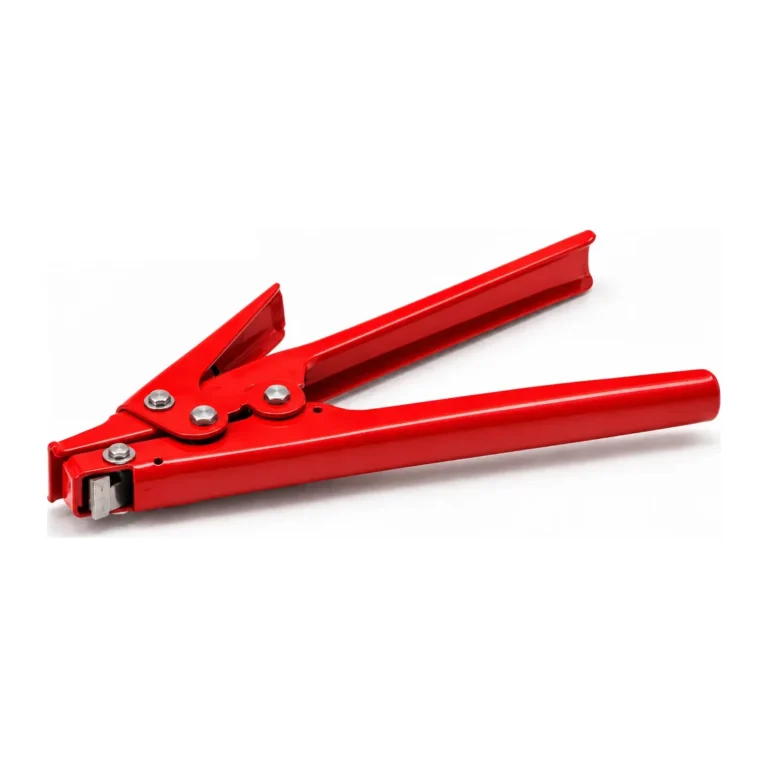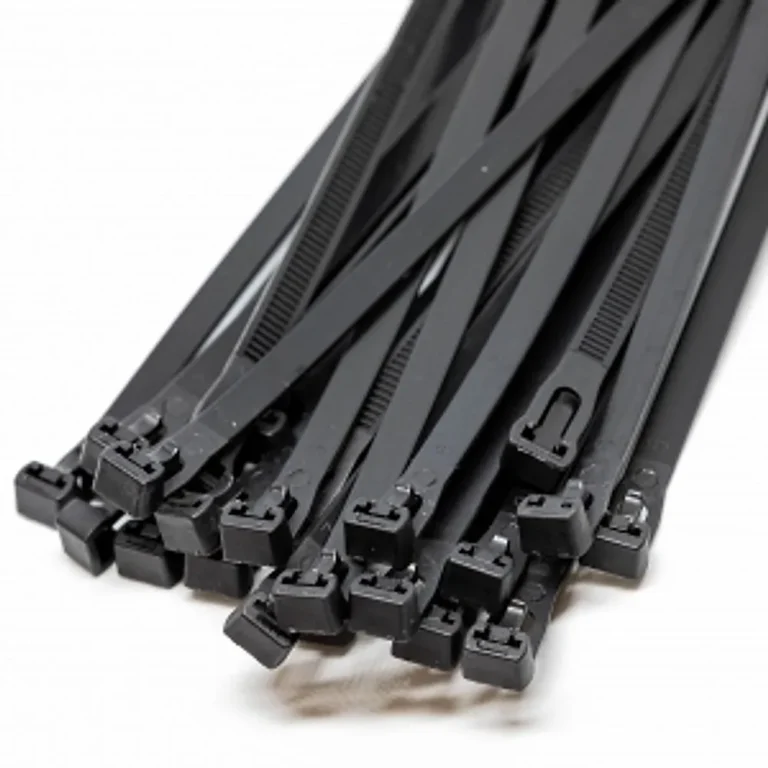
To install a stainless steel cable tie, wrap it around the bundle, feed the tail through the ball-lock head from the entry side, pull it snug by hand, then tension and cut it flush with a stainless cable tie gun. Wear gloves, because cut stainless strap is razor sharp, and fold any hand-cut tail back so no edge is exposed.
Below: how the ball lock works, what you need, the step-by-step method with and without a gun, tips for a lasting install, and how to remove a stainless tie safely.
How does a stainless steel cable tie lock?
Instead of a plastic pawl, a stainless tie head holds a small steel ball. As you pull the strap through, the ball rolls out of the way. When the strap tries to slide back, the ball wedges between the strap and the head, and the more load there is, the tighter it grips.
Because the lock is self-tightening, a stainless tie holds well under vibration and heat. It also means the head only works in one direction and cannot be released once tensioned.
What do I need to fit stainless cable ties?
- Stainless steel cable ties of the right grade (304 inland, 316 on the coast) and length.
- A stainless cable tie tensioning gun, strongly recommended for more than a few ties.
- Cut-resistant gloves. Stainless strap edges are sharp, and cut tails are sharper.
- Edge protection (a strip of rubber or split hose) for very sharp steel edges.
- Pliers and side cutters, if you are fitting without a gun.
How do I install a stainless tie step by step?
- Plan the spacing. On cable tray and frames, ties every 300 to 600mm is common; follow the project specification where there is one.
- Wrap the tie around the bundle and feed the tail into the head from the entry side. Most heads are marked, and the tie will not lock if fed the wrong way.
- Pull the tail through by hand until the tie is snug around the bundle. Check the head sits where you want it, usually on the side away from people and moving parts.
- Slide the tail into the nose of the gun, push the nose against the head, and squeeze. The gun pulls the strap to its set tension.
- Operate the cutter (or keep squeezing, depending on the gun) so the strap is cut flush with the head.
- Check the cut end. It should sit level with the head with no protruding edge. Run a gloved finger over it to be sure.
Can I fit stainless ties without a gun?
Yes, for a handful of ties. Pull the tail tight with pliers, then cut it with side cutters as close to the head as you can.
The problems are uneven tension and a sharp cut end. After cutting, use pliers to fold the cut end back over the head so the edge points away from hands and cables. On any job with more than a few dozen ties, a gun pays for itself quickly in time, safety and a neater finish. See cable tie guns explained.
How tight should a stainless tie be?
Tight enough that the bundle cannot slide or rattle, but not so tight that it crushes the cable insulation.
Stainless strap is thin and strong, so it is easy to over-tension onto soft cable, especially solar and data cable. Start with a low tension setting on the gun, fit a test tie, and check the insulation is not deformed before doing the whole run. Where the strap would sit directly on soft insulation or paint, use nylon-coated stainless ties.
What makes a stainless install last?
- Use 316 grade within a few kilometres of the coast. Salt air pits 304 over time.
- Do not let bare stainless touch bare aluminium in salty or damp air. Use coated ties or a barrier.
- Protect cables from sharp edges on frames and tray. Stainless will hold a cable hard against an edge.
- Keep tails cut flush. Long tails on roofs and walkways catch on clothing and gloves.
- Space ties evenly so no single tie carries a long, wind-loaded span.
Choosing between grades? Read 304 vs 316 stainless steel cable ties.
How do I remove a stainless steel cable tie?
The ball lock cannot be released in any practical way, so stainless ties are removed by cutting.
Wear gloves, cut the strap with side cutters or the gun’s cutter, and collect every offcut. Loose stainless offcuts on a roof can scratch panels and sheeting, and on the ground they can cut feet and tyres. Never cut toward cable insulation.
Is any job unsuitable for stainless cable ties?
Cable ties of any material are bundling and holding fasteners. Do not use them for lifting, fall arrest, restraint or structural loads. For work on electrical installations, follow the relevant standards and use a licensed electrician where the law requires it.
Quick answers
Do stainless steel cable ties need a special tool?
Not strictly, but a stainless tensioning gun gives even tension and a flush, safe cut. It is strongly recommended.
Which way does a stainless tie go in?
Feed the tail into the head from the entry side, usually marked. Fed the wrong way, the ball will not lock.
Can a stainless cable tie be reused?
No. Once tensioned it can only be removed by cutting.
How do I stop a stainless tie damaging cable?
Avoid over-tensioning and use nylon-coated stainless ties where the strap sits on soft insulation.