For neat switchboard cable management, use white or black nylon 66 cable ties in 3.6mm and 4.8mm widths, space them evenly along each run, tension them firmly without crushing insulation, cut tails flush, and label every circuit with write-on markers as you go. Use adhesive mounts with a screw to hold looms to the enclosure. Electrical work must be done by a licensed electrician to the wiring rules that apply.
This guide covers tie choice, tension, mounts, labelling, separating services and a final checklist for switchboards and control panels.
Why does switchboard cable management matter?
A tidy switchboard is easier to inspect, test, fault-find and extend. Neat looms also make it easier to see damaged insulation and overheating, and they leave room for airflow inside the enclosure.
Cable ties are the basic tool, but the type, size and tension matter as much as how neat the result looks.
Which cable ties should I use in a switchboard?
| Tie | Where it suits |
|---|---|
| White (natural) nylon 66 | Indoor boards: easy to see, clean looking, easy to spot a missing tie |
| Black UV-stabilised nylon 66 | Boards in sun, outdoor enclosures, meter boxes |
| 3.6mm white | Control wiring and small looms |
| 4.8mm white | Sub-mains and larger looms |
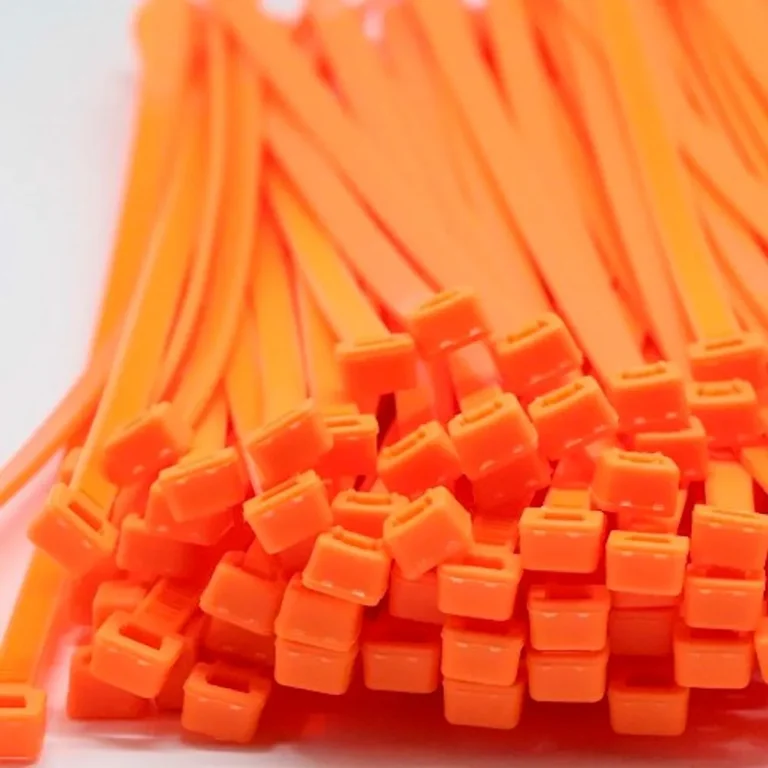
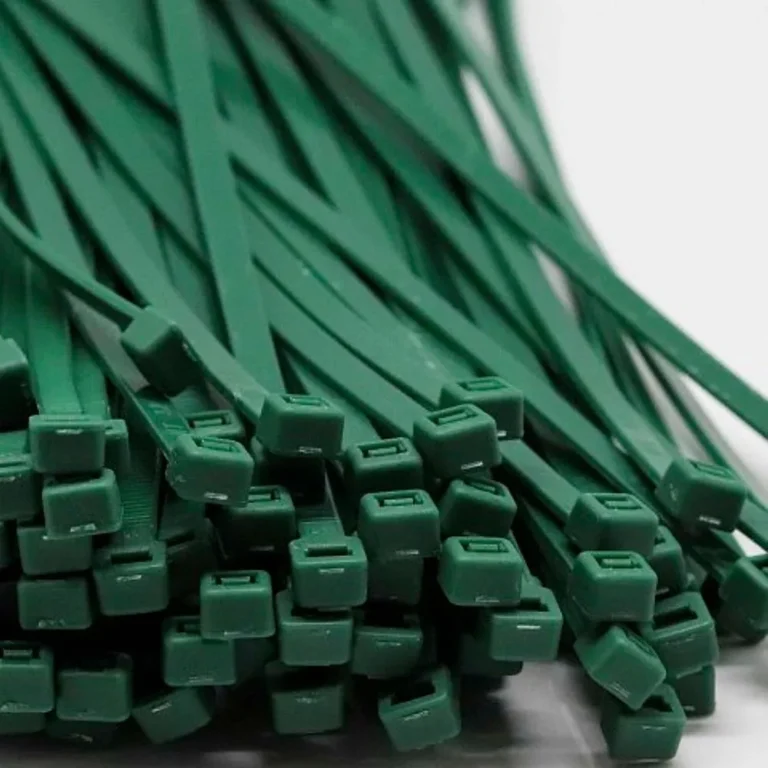
| Colour ties | Marking circuits, tenancies or services |
All our nylon ties are nylon 66, which keeps its strength better in a warm enclosure than nylon 6. See nylon 6 vs nylon 66 cable ties.
How tight should cable ties be in a switchboard?
Tight enough to hold the loom in shape, but not so tight that the tie deforms the insulation.
Over-tightened ties can cut into insulation over time, especially on warm conductors, and on data and control cable they can affect performance. A cable tie gun with adjustable tension gives the same result on every tie and cuts tails flush, which matters inside a board where a sharp tail can nick insulation or a hand. See cable tie guns explained.
How do I fix looms to the enclosure?
Adhesive cable tie mounts hold looms to the back of the enclosure or along chassis rails without drilling.
- Clean the surface with isopropyl alcohol and let it dry.
- Press the mount firmly for about 30 seconds.
- Leave the adhesive to set before loading the mount, ideally for a few hours.
- Add a screw through the centre hole where the board runs warm, because adhesive softens with heat.
On metal back plates and DIN rail chassis, mountable cable ties that screw directly to the plate are another option. The full comparison is in adhesive mounts, push mounts or mountable ties.
How should I label circuits?
Cable tie markers carry a write-on tag, so you bundle and label in one step. Label circuits as you terminate them, not at the end of the job, and use a permanent marker that will not fade in a warm board.
Match the labels to the circuit schedule on the door. A colour code can help, but it should never replace written labels on electrical circuits; see colour coding with cable ties.
How do I keep different services apart?
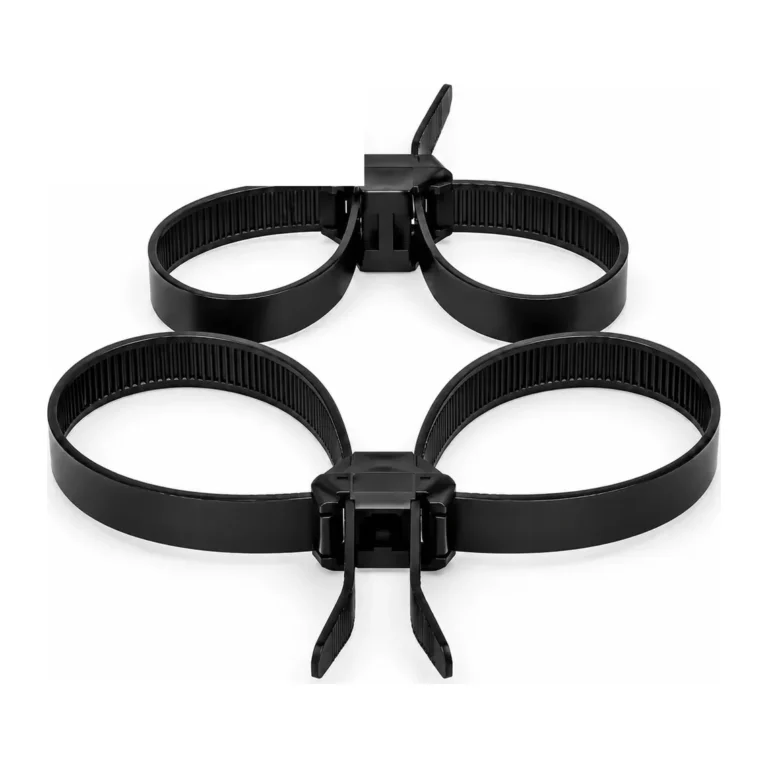
Where different services share a space, keep them in separate bundles. Double head ties hold two bundles apart with one tie, and coloured ties can mark tenancy or circuit groups. Follow the wiring rules for segregation between different voltage levels and services.
What does a good switchboard finish look like?
- Ties evenly spaced along each run, typically every 100 to 150mm on vertical looms.
- Looms square to the board, with neat bends and no crossed conductors.
- No sharp tails left inside the board.
- No insulation crushed or deformed under a tie.
- Every outgoing circuit labelled and matching the schedule.
- Room left for future circuits.
- Spare ties and markers left in the board for the next person.
Quick answers
Should I use white or black cable ties in a switchboard?
White is common indoors because it is easy to see. Use black UV-stabilised ties in outdoor enclosures and meter boxes in the sun.
What size cable ties suit switchboard looms?
3.6mm for control wiring and small looms, 4.8mm for larger looms.
Will adhesive mounts hold in a hot switchboard?
Adhesive softens with heat. Add a screw through the mount, or use mountable ties.
How far apart should ties be?
Evenly spaced so the loom holds its shape, often 100 to 150mm on vertical runs.