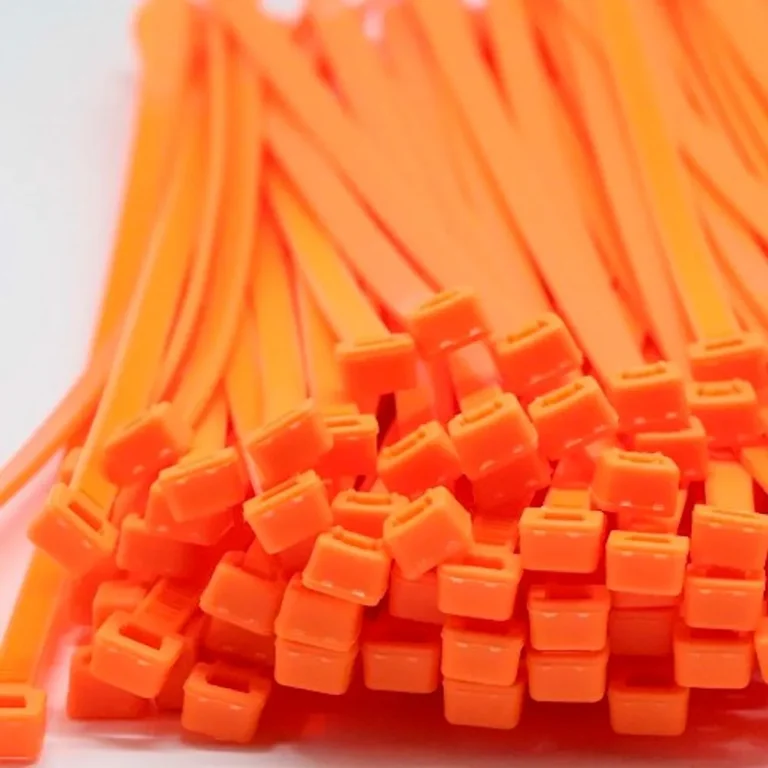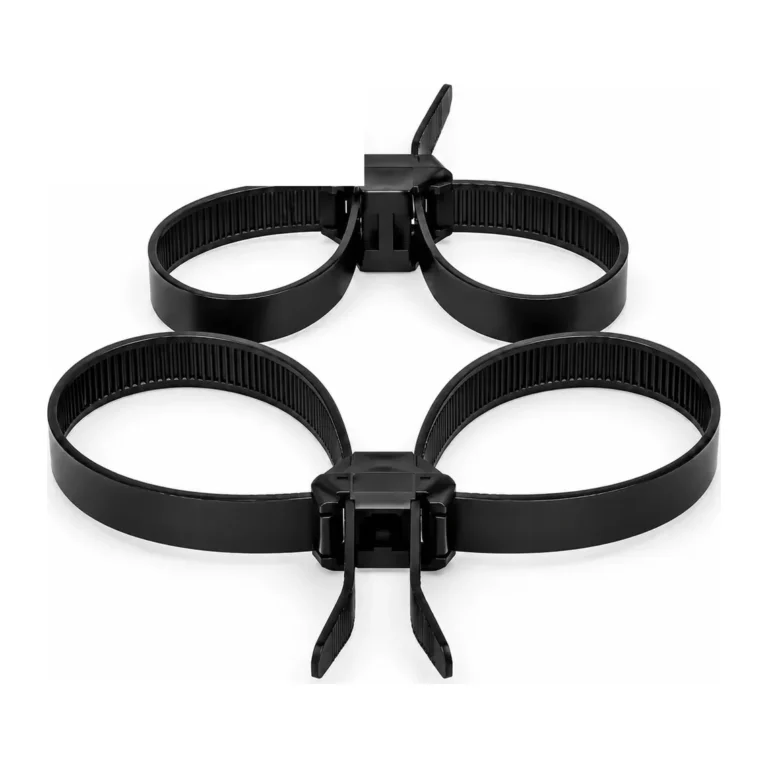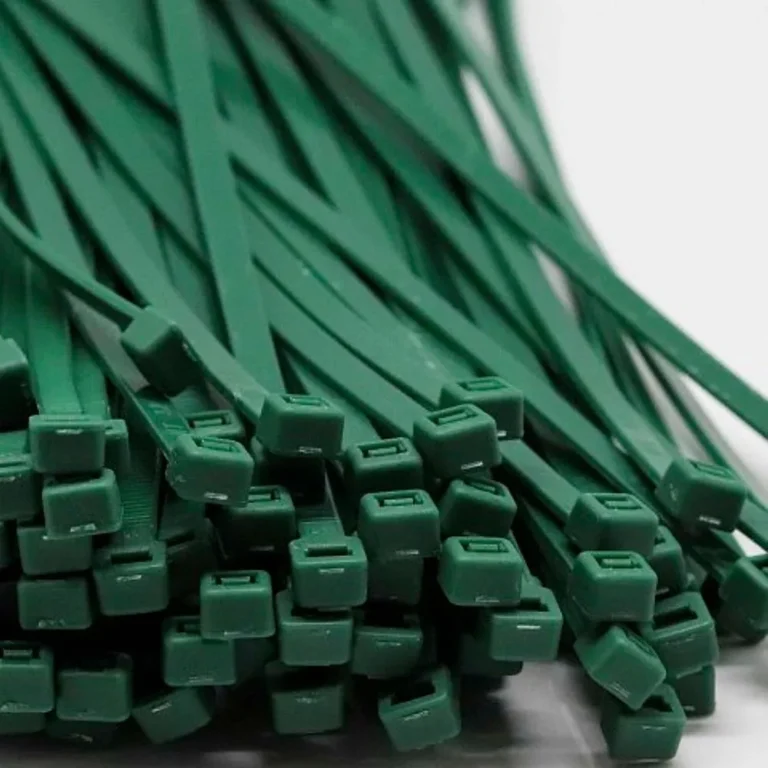
For solar installations, use stainless steel cable ties (304 inland, 316 on the coast) or nylon-coated stainless ties for cable runs under panels and on rails, because they do not degrade in sunlight. If you use nylon ties, use only UV-stabilised black ties, never white or coloured, and plan to inspect them. Fit with a tensioning gun so tails are cut flush.
Below: why solar is so hard on cable ties, choosing nylon or stainless, protecting cable and rails, coastal installs, sizes, and installation tips.
Why is solar so hard on cable ties?
Solar arrays are one of the harshest places a cable tie can live: full sun, roof temperatures far above air temperature, constant wind movement and a design life measured in decades.
Ties that fail let cables sag onto hot roof sheets or chafe against rail edges. Damaged PV cable insulation is a fault and fire risk, and it is expensive to find and fix once the panels are in place. The cable support system should be chosen to last as long as the panels.
Should I use nylon or stainless steel cable ties for solar?
For cable runs under panels and on rails, stainless steel is the long-life choice, because it is not affected by UV or heat. Nylon is acceptable only in UV-stabilised black and where it can be inspected.
| Option | Pros | Cons | Best use |
|---|---|---|---|
| UV-stabilised black nylon 66 | Low cost, gentle on cable, easy to fit | Will eventually degrade in full sun and heat | Inverter-side bundles in shade, short-term or easily inspected runs |
| 304 stainless steel | Not affected by UV or heat | Bare edge can cut insulation; can react with aluminium in salty air | Inland arrays, conduit to frames |
| 316 stainless steel | Also resists salt spray | Higher cost | Coastal installs |
| Nylon-coated stainless | Stainless life with a cushioned surface | Higher cost | PV cable to aluminium rails, vibrating runs |
How do I protect solar cable and aluminium rails?
Bare stainless strap can cut into cable insulation as the cable moves in the wind, and stainless touching aluminium rails can speed up corrosion in damp, salty air.
Nylon-coated stainless ties solve both problems: the strength and UV life of stainless with a plastic surface between the steel, the cable and the rail. Where you use bare stainless, avoid over-tensioning onto soft PV cable and keep the strap off sharp rail ends.
What should I use on coastal solar installs?
Within a few kilometres of the sea, use 316 stainless steel ties. Salt-laden air pits 304 over time, and rust staining on a roof or rail is a sign the ties are being attacked. Inland, 304 stainless does the job for less. The full comparison is in 304 vs 316 stainless steel cable ties.
Which cable tie sizes suit solar work?
| Tie | Typical use |
|---|---|
| 4.6 x 200mm stainless | Single or paired PV cables to rails |
| 4.6 x 300mm stainless | Small bundles along rail runs |
| 4.6 x 500mm stainless | Larger bundles, cable to frame members |
| 7.8 x 350mm stainless | Conduit and larger bundles to frames |
| 7.6mm black nylon | Inverter-side bundles in shade |
Size the length with the bundle size chart.
How should cable ties be installed on a solar array?
- Plan the cable route so cable is supported along the rails and never rests on roof sheeting or in gutters.
- Keep cable away from sharp rail ends, cut edges and clamp bolts. Use edge protection where needed.
- Space ties evenly so no single tie carries a long, wind-loaded span.
- Tension firmly but without crushing the cable, and test a tie before doing the whole array.
- Use a tensioning gun and cut flush. Loose or sharp tails on roofs catch on gloves, clothing and panels.
- Collect every offcut. Stainless offcuts left on a roof scratch panels and sheeting.
- Follow the panel and mounting system maker’s instructions and the relevant Australian standards for PV installations.
Solar electrical work must be carried out by appropriately licensed and accredited people. A stainless tie gun makes a big array much faster to finish neatly.
How often should solar cable ties be checked?
Check cable supports at each scheduled system inspection, and after severe storms. Look for nylon ties that have faded or cracked, cable resting on the roof, rust staining around stainless ties near the coast, and any insulation damage where cable meets a tie or edge. Replace failed ties with stainless rather than like-for-like nylon.
Quick answers
What cable ties are best for solar panels?
Stainless steel or nylon-coated stainless ties for long life in sun and heat. Use 316 grade near the coast.
Can I use black nylon cable ties on solar?
Only UV-stabilised black ties, and only where they can be inspected and replaced. Never white or coloured.
Will stainless ties damage PV cable?
Bare stainless can cut insulation if over-tensioned or if the cable moves. Coated stainless ties reduce that risk.
Why not use 304 stainless on the coast?
Salt air causes pitting and staining on 304. 316 contains molybdenum, which resists it.